
Unit Plan: One-Minute Arguments
A quick video project with a big impact

This month’s unit plan is a freebie for all! in July But we’d love to have you join our paid membership community for $5/month or $50/year.
Each month, you’ll receive a complete unit plan like this one, a Craft Close-Up that gives you big and small ideas for teaching with a mentor text, and brand new fall features like skill-based microcourses and teaching guides — all in your inbox!
I told you these semiquincentennial hits just keep coming. And this unit plan is another one!
Historian Heather Cox Richardson started her 250 to 250 project to capture 250 people, places, and events that have had a major impact on making America “a more perfect union”. Each entry is a one minute video featuring narration and public-domain images, and most are read by famous and influential Americans. It’s like a micro Ken Burns documentary.
This month’s unit plan sets students up to make their own 250 to 250 video argument. Ask students to create a video about a significant person, place, or event that Richardson’s team left out.
OR choose something completely different!
Maybe your students will each submit a video about a person, place, or event that was pivotal in their own life. Or the life of your community. Maybe developing your own concept can be a class discussion and vote?
Regardless of the concept you choose, you can consider this one (multimedia) lap around the argument track -- practicing the skills of making a claim, supporting it with evidence, and considering a “so what” that is necessary for all argument-making.
Here’s the unit plan:
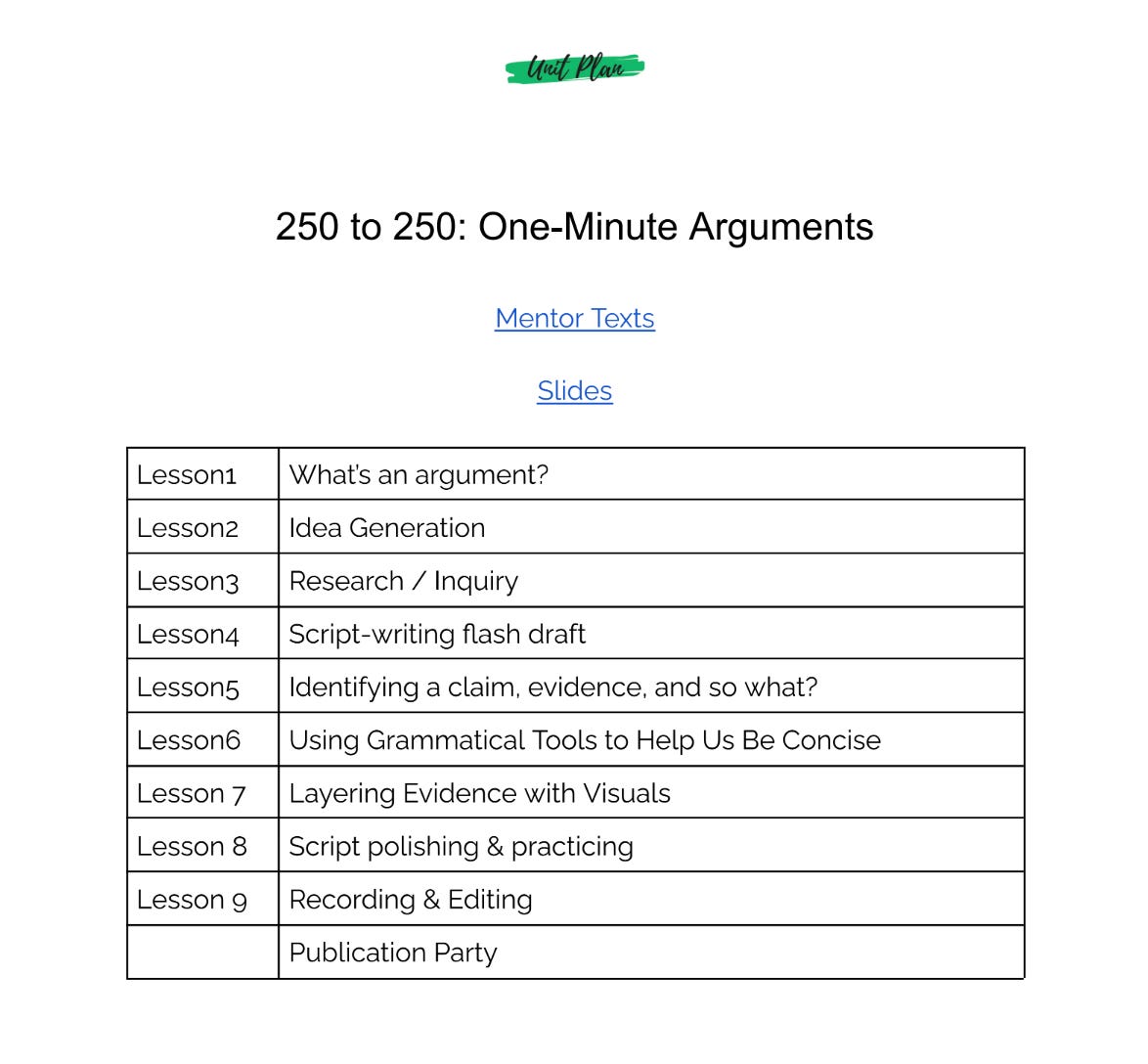
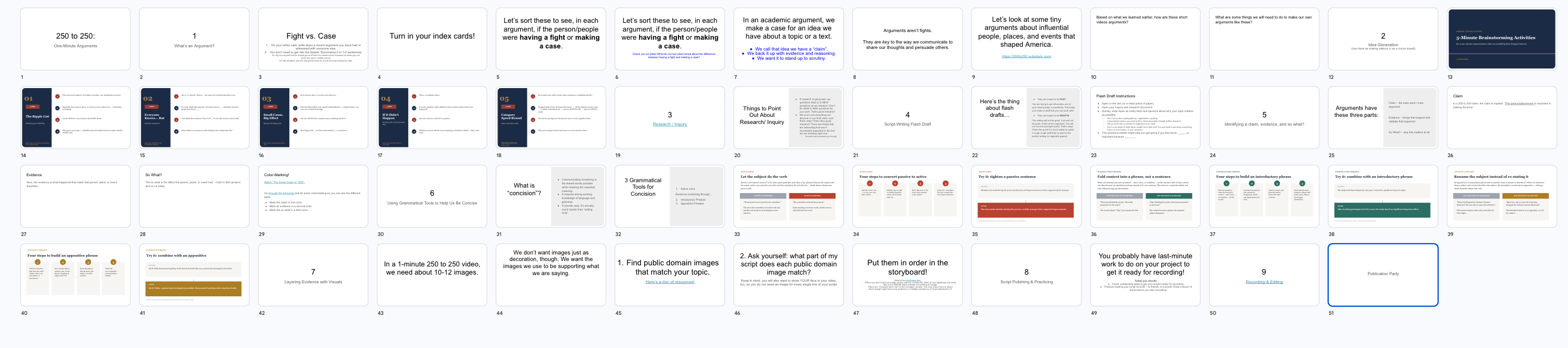
Of note: I’ve gone into greater detail on the slides this time, including notes for YOU in the “speaker notes” section at the bottom. Please let me know if these are helpful or if you’d prefer I return to tips & tricks here in the newsletter. :)
Before you go, I could use your help with fall content! I’d love to know:
I’m thinking about a book club. We’d read a student-facing books together each quarter (rotating between MG, YA, and classics). I’ll bring on a special guest to discuss, we’ll crowd source some ideas for teaching, and then I’ll create a downloadable guide for using it in both reading and writing lessons for your classes. Would this be of interest to you?
What would you like to learn to do better in your own teaching practice / classroom? I’m working on some multi-part microcourses. What topics would you like to see in a microcourse that teaches you a skill you can then use in your classroom?
Leave me a comment to weigh in!
A book club sounds wonderful!
I am looking for lessons to make writing more process-based and not just product-based, teaching students how to focus on the writing process (brainstorming, reflection, audience justification, explanation of revisions, and feedback implementation/rejection) more intentionally. This will hopefully prevent the AI-generated essays that have been on the uptick these past few years.
I would love to be part of the book club.
I am looking more at self-assessments and how to use them for metacognitive feedback before, during, and after a unit. I am interested in building student agency and independence through this process and hopefully making writing instruction more meaningful and individualized (as much as I can).